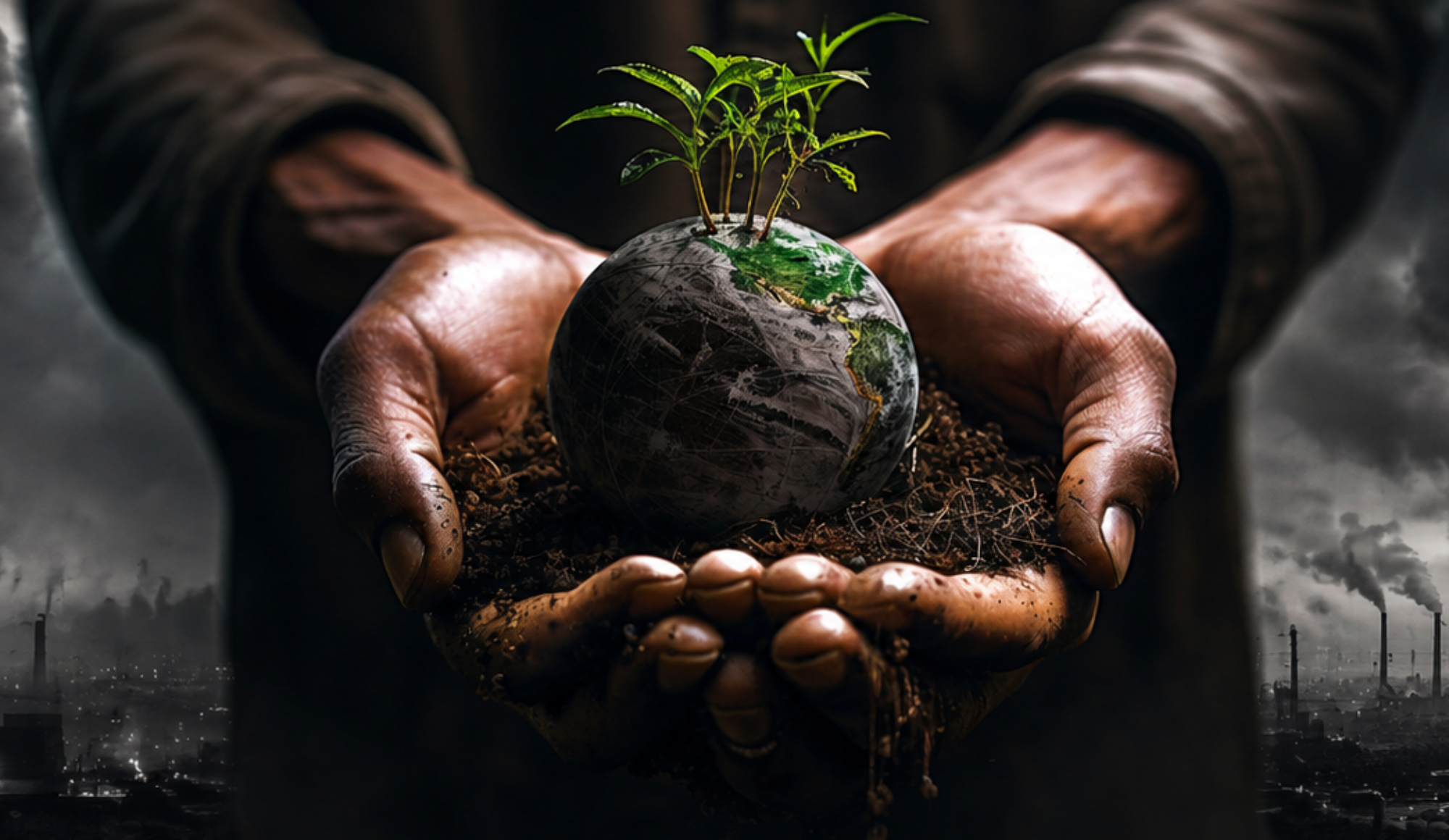


Information can explain a problem.
It can describe what is happening, show why it matters, and make visible what would otherwise remain hidden. Information can give us data, facts, warnings, targets, reports, and arguments. In sustainability work, information is necessary. Without it, we cannot understand the scale of climate change, resource use, biodiversity loss, social inequality, or the organisational habits that keep unsustainable practices in place.
But information rarely changes a practice by itself.
Most people already know that sustainability matters. Many people know that climate change is real. Many know that consumption, production, energy, transport, food systems, social conditions, and everyday routines are connected. Many organisations already have sustainability strategies, values, policies, and targets.
Still, knowing is not the same as being able to act.
This is one of the central challenges in sustainability work. We often assume that if people receive better information, clearer facts, stronger warnings, or more convincing arguments, change will follow. Sometimes it does. More often, people return to the same routines, pressures, uncertainties, and systems that shaped their behaviour before.
That does not make information useless.
It means information is only the beginning.
The deeper question is not only what people know. It is how they make sense of what they know, how they connect it to their own situation, and how they find practical ways to act within the conditions they are part of.
That is where learning begins.
When Knowledge Stays Abstract
Sustainability can easily become abstract.
It can become a set of reports, goals, values, frameworks, strategies, or future visions. These may be necessary. They help create direction. They give language to ambition. They make responsibility visible. But they rarely create change if they remain detached from people’s lived experience.
A team may understand a sustainability goal but not know what it means for their daily work.
A student may understand a climate issue but feel powerless in relation to its scale.
A manager may support a new strategy but lack the time, confidence, or organisational structure needed to work differently.
A project group may agree on the importance of sustainability but avoid the difficult conversations about trade-offs, resources, responsibility, or implementation.
In these situations, the problem is not simply a lack of knowledge. The problem is that knowledge has not yet become connected to responsibility, relationships, choices, and action.
Information has entered the room.
But learning has not yet happened.
This matters because abstract sustainability can create a gap between what people say and what people are able to do. An organisation can have ambitious language and still operate through old routines. A project can use strong sustainability concepts and still reproduce familiar patterns. A group can agree that change is needed and still be unsure where to begin.
The challenge is not only to communicate sustainability better.
The challenge is to help people work with it.
Information Is Not the Same as Learning
Information tells people what is happening.
Learning changes how people understand their role in what happens next.
That difference matters.
Information can be delivered. Learning has to be worked through – it requires reflection, dialogue, experience, uncertainty, disagreement, and connection to real situations. It asks people not only to receive knowledge, but to examine assumptions, recognise patterns, understand relationships, and consider what responsible action could look like in practice.
This is why sustainability learning cannot be reduced to awareness.
Awareness may create concern. It may make people care. It may help them recognise that something is wrong. But concern alone does not automatically lead to action. People can be concerned and still feel stuck. They can agree with the problem and still lack direction. They can want change and still be shaped by systems that make change difficult.
Deeper learning helps people move from concern to judgement, from judgement to participation, and from participation to action.
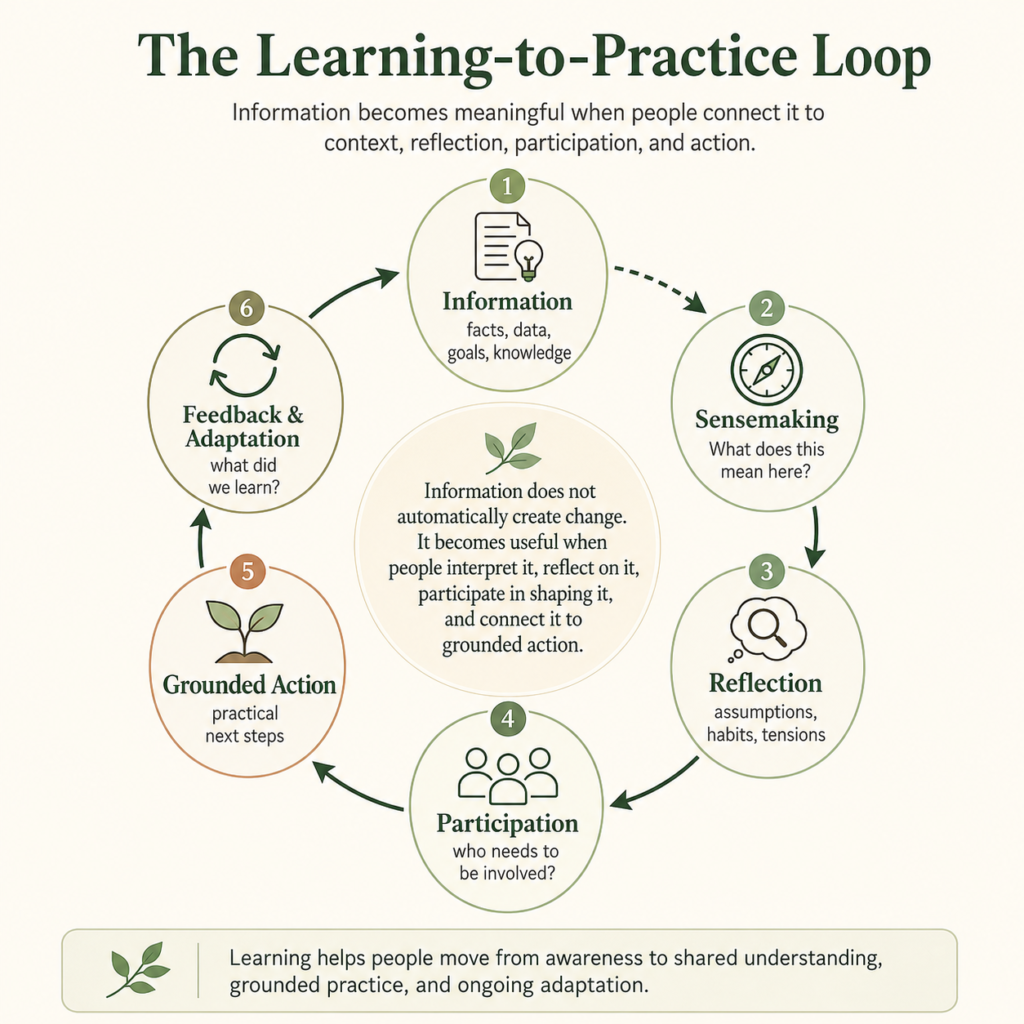
It helps people ask: What does this mean here? What does it mean for us? What are we already doing? What are we avoiding? What choices are actually available? What needs to change in the way we work, decide, organise, or collaborate?
These questions move sustainability from general agreement into situated practice.
Why Slowing Down Can Move Things Forward
In organisations, schools, projects, and communities, there is often pressure to move quickly. People want solutions, plans, deliverables, decisions, and visible progress. That pressure is understandable. Sustainability challenges are urgent, and many people are tired of talking without action.
But when problems are complex, moving too quickly can create weak solutions.
People may solve the wrong problem. They may repeat familiar patterns. They may design actions that look good on paper but do not fit the people, resources, culture, or everyday conditions involved. They may use sustainability language to describe a change that has not really changed the system underneath.
Sometimes the most practical thing is to slow down enough to understand what is really going on. That does not mean overthinking. It means creating enough reflective space to ask better questions before rushing into action.
What assumptions are shaping this problem?
Who is affected but not involved?
What resources are actually available?
What tensions are being avoided?
What makes the current behaviour easier than the desired behaviour?
What would make responsible action more possible?
These questions do not delay change. They improve the quality of action. Action without reflection can reproduce the same system under a new name. But reflection without movement can become paralysis.
The work is to connect the two.
A useful sustainability process does not stop at reflection. It uses reflection to support better action. It helps people see more clearly, decide more responsibly, and move with greater awareness of the conditions they are working within.
Learning as a Shared Process
Sustainability is not only individual. It is relational.
People act within teams, organisations, institutions, cultures, places, routines, expectations, and material conditions. This means learning also has to become shared. It cannot only happen inside one person’s head.
A single person may understand the problem. But if the wider team does not share the language, the direction, or the responsibility, little changes. A leader may want to act differently. But if the organisational routines reward speed, control, and short-term outputs, sustainability remains difficult to practise. A group may care deeply. But without structure, participation, and shared meaning, concern can remain scattered.
People need spaces where different perspectives can meet.
They need to hear how others understand the same situation.
They need to see where their own assumptions are limited.
They need to explore tensions without immediately closing them down.
They need to develop language for complexity that does not make action impossible.
This is where facilitation matters.
Good facilitation is not about controlling a conversation. It is not about forcing agreement or producing quick consensus. It is about creating the conditions where people can think more clearly together.
A facilitated learning space can help people move from scattered concern to shared direction. It can make hidden assumptions visible. It can connect lived experience with wider systems. It can help a group identify what is possible now, what needs to be tested, and what requires further work.
In that sense, facilitation is not separate from sustainability work.
It is one of the ways sustainability becomes possible.
From Passive Understanding to Active Participation
One risk in sustainability communication is that people become passive recipients of problems.
They are told what is wrong.
They are told what should happen.
They are told what they ought to care about.
But if people are not invited into the process of interpretation, decision-making, and action, their role remains weak. They may agree, but not feel ownership. They may listen, but not participate. They may care, but not know where to begin.
Learning becomes deeper when people are invited to participate.
Participation does not mean that everyone decides everything. It does not mean that all perspectives are equally responsible for every decision. It does not remove the need for leadership, expertise, structure, or direction.
Participation means that people are given real opportunities to contribute to meaning, direction, and practice. Their experience is taken seriously. Their questions matter. Their knowledge of everyday conditions becomes part of the process. The process is open enough for insight to emerge, but structured enough for action to follow. This balance is important.
Too much control kills participation.
Too much openness creates confusion.
A good learning process needs both structure and space.
Structure gives direction.
Space allows people to think, connect, and contribute.
When this balance works, people are not simply being informed about sustainability. They are helping shape what sustainability means in practice.
Learning That Leads to Practice
For learning to matter, it has to move somewhere.
Not every workshop needs to end with a full plan. Not every conversation needs to produce immediate transformation. Not every learning process can solve a complex challenge at once. But learning should create movement. It should help people see something more clearly, ask better questions, make a more responsible decision, test a new action, or adjust the way a project is being carried forward.
Practical learning can take many forms.
It can be a workshop where a team maps the conditions shaping a sustainability challenge.
It can be a coaching process where an individual clarifies values, choices, and next steps.
It can be a project session where people identify assumptions, stakeholders, resources, and possible experiments.
It can be a learning design where participants move from experience to reflection, from reflection to insight, and from insight to action.
The point is not to turn every moment into a task. The point is to make learning useful. Useful learning helps people act with more awareness, responsibility, and purpose. It does not promise simple answers to complex problems. It does not pretend that change is easy. But it helps people move from abstract ambition toward grounded action.
That movement matters.
Sustainability cannot remain only a message. It has to become something people can work with, question, translate, practise, and improve over time.
The Practical Work of Facilitation
This is where my work with Urbanhydro is focused.
I create open, reflective learning spaces where individuals, teams, and organisations can explore complexity, share perspectives, and co-create practical ways forward. The aim is not to deliver fixed answers from the outside. It is to support people in developing better questions, clearer direction, stronger collaboration, and actions that fit the realities they work and live within.
This work often begins with simple but important questions.
What do we already know?
What are we assuming?
What are we not seeing?
Who needs to be part of the conversation?
Where is there tension?
Where is there energy?
What would make action easier?
What is one responsible next step?
These questions help turn information into reflection, reflection into shared understanding, and shared understanding into grounded action. They also help avoid one of the common traps in sustainability work: the belief that change happens when the right message is delivered clearly enough.
Messages matter. But people also need time, language, structure, confidence, participation, and practical pathways. They need to understand not only the problem, but their own role within it. They need to see where they have agency, where they depend on others, and where the system itself needs to be questioned.
That is why facilitation is not just a soft addition to sustainability work. It is a practical method for helping people move through complexity without becoming stuck.
A More Workable Understanding of Learning
Real change requires more than information. It requires learning that is reflective, participatory, relational, and connected to lived experience.
It also requires spaces where people can slow down without becoming stuck, and conversations that can hold complexity without making action impossible. This means having the courage to examine assumptions, the discipline to connect insight with practice, and the humility to keep learning as reality responds.
Information can tell us that change is needed. Learning helps us understand how change becomes possible.
That is where the deeper work begins: when sustainability is no longer received as an abstract message, but shaped as a shared practice capable of changing what people actually do.