


18 procent af danske lønmodtagere svarer, at de ofte eller hele tiden har følt sig stressede inden for de seneste to uger. Tallet kommer fra Arbejdstilsynets Nationale Overvågning af Arbejdsmiljøet blandt Lønmodtagere fra 2023, som bygger på svar fra cirka 21.700 lønmodtagere. Blandt dem, der ofte eller hele tiden følte sig stressede, pegede ni ud af ti på arbejdet eller kombinationen af arbejde og privatliv som den vigtigste kilde.
Konsekvenserne rammer ikke kun den enkelte. Det Nationale Forskningscenter for Arbejdsmiljø estimerer, at fravær, som kan forbindes med stress, hvert år medfører 61,9 millioner tabte arbejdstimer på danske arbejdspladser. Det svarer til 37.335 fuldtidsstillinger og omkostninger på mindst 16,4 milliarder kroner.
Tallene kan ikke alene forklare, hvorfor mennesker bliver stressede, eller hvordan problemerne skal løses. Men de gør det vanskeligt at behandle tempo, kapacitet og prioritering som spørgsmål, den enkelte medarbejder selv skal håndtere. De rejser også et organisatorisk spørgsmål: Hvad sker der, når nye mål, krav og initiativer løbende lægges oven på de eksisterende, uden at noget andet bliver justeret eller taget væk?
I mange organisationer skal driften fortsætte, kvaliteten opretholdes, dokumentationen forbedres, nye teknologier indføres, medarbejderne udvikles, og trivslen styrkes. Samtidig forventes organisationen at reagere hurtigere på nye krav og skabe synlige resultater inden for stadig kortere tidsrammer.
Bæredygtighed bliver ofte føjet til denne liste som endnu et strategisk fokusområde.
Problemet er ikke ambitionen om bæredygtighed. Problemet opstår, når den behandles som endnu et krav frem for som en rettesnor for organisationens øvrige valg.
Når ambitioner forveksles med prioriteringer
Når en organisation betegner mange forskellige områder som topprioriteter, har den ikke nødvendigvis prioriteret. Den har formuleret ambitioner.
Prioritering begynder først, når organisationen tager stilling til, hvad der skal have mest opmærksomhed nu, hvad der skal fylde mindre, hvad der kan vente, og hvad den bevidst vælger ikke at gøre. Det kræver samtidig en vurdering af, om der er sammenhæng mellem målene og den tid, de kompetencer, det mandat og de ressourcer, der stilles til rådighed.
Uden denne afklaring bliver nye ambitioner let oversat til individuelle krav. Medarbejderen forventes at finde pladsen, balancen og motivationen, selv om de organisatoriske rammer ikke er blevet ændret. Organisationen tilføjer et mål, men overlader den reelle prioritering til de mennesker, der allerede står med opgaverne.
Det gælder også bæredygtighed. Organisationen kan opstille mål om mindre miljøbelastning, større social ansvarlighed, bedre trivsel, mere deltagelse og langsigtet robusthed. Men hvis målene ikke ledsages af tydelige valg og ændrede betingelser, bliver bæredygtighed noget, medarbejderne skal gøre ved siden af deres egentlige arbejde.
Resultatet er ikke nødvendigvis højere kvalitet eller mere bæredygtig praksis. Det kan lige så vel blive fragmenteret opmærksomhed, utilstrækkelig forberedelse og indsatser, der sættes i gang, før nogen har afklaret, hvad de faktisk skal føre til.
Bæredygtighed skal forme prioriteringen
Bæredygtighed bør ikke reduceres til et særskilt miljøprojekt eller en række aktiviteter, der placeres ved siden af drift, økonomi, kvalitet og medarbejderforhold.
FN’s 2030-dagsorden beskriver de økonomiske, sociale og miljømæssige dimensioner af bæredygtig udvikling som integrerede og udelelige. Bæredygtighed handler dermed ikke kun om klima, energi, materialer og natur. Den handler også om sociale konsekvenser, menneskelige behov, økonomiske betingelser, institutionel kapacitet og muligheden for at opretholde en praksis over tid.
En løsning er ikke nødvendigvis bæredygtig, blot fordi den reducerer en bestemt miljøpåvirkning. Man må også undersøge, om den flytter belastningen til andre mennesker, andre steder eller et senere tidspunkt. Hvem modtager fordelene? Hvem bærer omkostningerne? Hvilke arbejdsbetingelser skaber løsningen? Og kan organisationen faktisk opretholde den?
På samme måde er en arbejdsproces ikke bæredygtig, hvis den kun fungerer, fordi medarbejdere permanent kompenserer for utilstrækkelige ressourcer, uklare roller eller modstridende krav. En organisation er heller ikke robust, hvis den når sine kortsigtede mål ved gradvist at nedbryde den menneskelige og organisatoriske kapacitet, som fremtidige resultater afhænger af.
Bæredygtighed skal derfor ikke blot prioriteres. Den skal være med til at afgøre, hvordan vi prioriterer.
Det betyder ikke, at enhver beslutning skal føre til den mest omfattende eller ideelle løsning. Det betyder, at beslutninger vurderes i et bredere og længere perspektiv. Hvilke konsekvenser har valget? Hvilken kapacitet kræver det? Hvad bliver nedprioriteret som følge af beslutningen? Og skaber indsatsen en reel forbedring, eller flytter den blot problemet?
I denne forståelse er bæredygtighed ikke endnu et krav om at gøre mere. Den er en rettesnor for at vælge mere ansvarligt.
Den nødvendige modreaktion
Når arbejdslivet præges af flere samtidige krav, er opfordringen til at sænke tempoet både forståelig og nødvendig.
Svend Brinkmann har skrevet om begrænsningens kunst og værdien af aktivt at gå glip af noget frem for at forsøge at ville det hele. Oliver Burkeman tager udgangspunkt i vores begrænsede tid og kritiserer forestillingen om, at bedre produktivitet kan gøre det muligt at få kontrol over alle vores forpligtelser. James Clear illustrerer den samme grundlæggende begrænsning med fire blus, der repræsenterer forskellige livsområder: Vi kan skrue op nogle steder og ned andre steder, men ikke holde alle blus på maksimal styrke samtidig.
Det er en vigtig korrektion til en kultur, hvor acceleration, udvikling og optimering let bliver mål i sig selv. Mennesker og organisationer har begrænset tid, energi, opmærksomhed og kapacitet. Nogle opgaver må forenkles, nogle ambitioner må udskydes, og andre må opgives, så det vigtigste kan få den nødvendige opmærksomhed.
Men en nødvendig modreaktion kan udvikle sin egen blinde vinkel. Den opstår, når accepten af begrænsninger glider over i en ukritisk hyldest til “godt nok”.
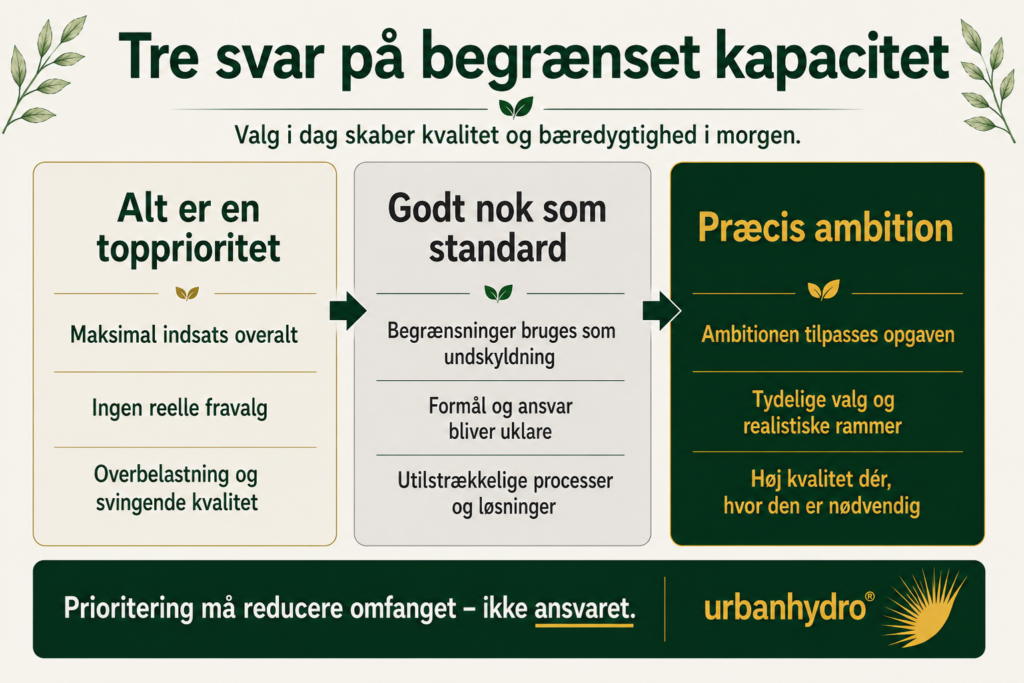
Mindre aktivitet er ikke automatisk mere bæredygtig. Et lavere tempo skaber ikke i sig selv bedre kvalitet. Og “godt nok” er ikke altid udtryk for moden prioritering. Nogle gange dækker det over, at forventningerne ikke blev afstemt, forarbejdet ikke blev udført, den nødvendige dialog ikke blev taget, og processen ikke blev fulgt til dørs.
Problemet er ikke, at vi må prioritere. Problemet opstår, når vi enten nægter at prioritere eller bruger prioritering som undskyldning for lav kvalitet.
Godt nok til hvad?
“Godt nok” kan være en sund korrektion til perfektionisme og urealistiske forventninger. Men begrebet bliver først meningsfuldt, når vi spørger, hvad indsatsen skal være god nok til.
Et foreløbigt udkast kan være godt nok til en intern samtale uden at være godt nok som beslutningsgrundlag. En pilot kan være god nok til at undersøge en antagelse uden at være klar til at blive skaleret. En aktivitet kan være god nok til at skabe opmærksomhed uden at være tilstrækkelig til at ændre praksis.
“Godt nok” er derfor ikke en universel standard. Det er en vurdering af, om noget opfylder sit formål på en fagligt og etisk forsvarlig måde inden for de reelle begrænsninger. Vurderingen kræver, at formålet er tydeligt, at forventningerne er afstemt, og at man forstår, hvem indsatsen vedrører, og hvilke konsekvenser den kan få.
En opgave kan være enkel uden at være sjusket. En proces kan være kort uden at være uansvarlig. Et resultat kan være tilstrækkeligt uden at være tilfældigt.
Når “godt nok” bruges, før nogen har afklaret, hvad opgaven skal bidrage til, er det ikke en begrundet kvalitetsvurdering. Det bliver en måde at lukke diskussionen på.
Kvalitet skabes gennem hele processen
Vi taler ofte om kvalitet, som om den primært findes i det færdige resultat. Men lav kvalitet begynder ofte længe før rapporten, strategien, mødet eller projektleverancen kan vurderes.
Den begynder, når en opgave sættes i gang, uden at det er afklaret, hvilket problem den skal bidrage til at løse. Når forventningerne forbliver usagte, og de involverede går ind i processen med forskellige forestillinger om resultatet. Eller når organisationen lover mere, end dens tid, mandat og ressourcer kan bære.
Den fortsætter, når konteksten ikke undersøges, forarbejdet springes over, og den nødvendige dialog ikke bliver taget. Det samme sker, når aktiviteter vælges, fordi de er velkendte eller synlige, snarere end fordi de understøtter et tydeligt formål.
Lav kvalitet kan også optræde i processer, der ser involverende ud. Der bliver måske bedt om input, men ingen har forklaret, hvad inputtet kan påvirke. Medarbejdere inviteres til at deltage, men deres rolle, mandat og handlemuligheder forbliver uklare.
Til sidst bliver den manglende kvalitet cementeret, hvis arbejdet ikke følges til dørs. Input indsamles, men anvendes ikke. Beslutninger træffes, men ansvar og næste skridt forbliver uafklarede. En aktivitet afsluttes, selv om forbindelsen til den efterfølgende praksis aldrig blev etableret.
En indsats kan derfor være flot præsenteret, professionelt gennemført og positivt evalueret, men stadig have lav kvalitet, hvis den ikke er forbundet med den praksis, den skulle påvirke. Omvendt kan en enkel og afgrænset indsats have høj kvalitet, hvis dens formål er tydeligt, forventningerne er afstemt, og der findes en realistisk vej videre.
Prioritering må gerne reducere omfanget. Den bør ikke fjerne ansvarligheden.
Når ambitionen skal oversættes
Afstanden mellem en strategisk bæredygtighedsambition og organisationens hverdagspraksis forsøges ofte håndteret gennem afgrænsede indsatser. Det kan være intern kommunikation, undervisning, medarbejdermøder, pilotprojekter, læringsforløb eller workshops.
Sådanne formater kan skabe et fælles sprog, kvalificere et problem og hjælpe mennesker med at forbinde overordnede mål med konkrete roller og beslutninger. Men formidling skaber ikke automatisk forståelse, og forståelse fører ikke automatisk til ændret praksis.
En meta-analyse af 89 studier viser, at overførsel af læring ikke alene afhænger af selve træningsaktiviteten. Deltagernes forudsætninger, aktivitetens udformning og det arbejdsmiljø, læringen skal anvendes i, har også betydning. En senere meta-analyse peger mere specifikt på støtte fra kolleger, ledere og organisationen som væsentlig for, om nye kundskaber og færdigheder bliver anvendt og fastholdt i arbejdet.
En afgrænset aktivitet må derfor vurderes som en del af en større organisatorisk proces. Dens kvalitet afhænger af forbindelsen mellem formål, forberedelse, deltagelse, arbejdsbetingelser og det, der skal ske bagefter.
En workshop er et tydeligt eksempel. Den kan ikke løse et komplekst organisatorisk eller bæredygtighedsmæssigt problem på én dag. Det bør den heller ikke love. Men deltagerne bør vide, hvorfor de er inviteret, hvad de forventes at bidrage med, hvad deres bidrag kan påvirke, og hvordan arbejdet skal føres videre.
Kvaliteten begynder derfor før deltagerne træder ind i lokalet. Den skabes gennem forståelsen af konteksten, afklaringen af formålet og forbindelsen til de problemer, deltagerne faktisk møder. Under workshoppen er aktivitet heller ikke i sig selv et kvalitetskriterium. Deltagelse bliver først meningsfuld, når den har en tydelig funktion og et reelt handlerum.
Kvaliteten slutter heller ikke automatisk med dagens program. Uden stillingtagen til mandat, ansvar, opfølgning og næste skridt risikerer workshoppen at blive en isoleret oplevelse: måske inspirerende og positivt evalueret, men uden varig forbindelse til organisationens praksis.
En workshop skal ikke tage ansvar for hele organisationens forandring. Men den skal tage ansvar for den del af processen, den påtager sig.
Mere præcis ambition
Ikke alle opgaver kræver samme ambitionsniveau. Nogle kræver meget høj kvalitet, fordi konsekvenserne af fejl er store, tillid er afgørende, eller opgaven er central for organisationens formål. Andre kræver pålidelig kvalitet. De skal fungere stabilt, forståeligt og ansvarligt, men behøver ikke være exceptionelle. Endelig er der områder, som bevidst kan nedprioriteres.
Det afgørende er, at organisationen kan skelne mellem dem og stå ved sine valg. Hvis vi kræver excellence overalt, mister vi kapaciteten til at levere den dér, hvor den virkelig er nødvendig. Hvis vi omvendt ophøjer “godt nok” til et generelt princip, mister vi evnen til at stille krav og insistere på kvalitet, når den faktisk betyder noget.
Det ansvarlige alternativ er ikke lavere ambition, men mere præcis ambition. Indsatsens rækkevidde kan afgrænses, uden at ansvaret for dens gennemførelse forsvinder.
Det afgørende spørgsmål er derfor ikke kun, om vi skal sænke tempoet. Det er, hvad det lavere tempo skal give plads til. Bruges det til at forstå konteksten, afstemme forventninger og skabe en stærkere forbindelse mellem ambition og praksis, kan det øge kvaliteten. Bruges det blot til at gøre mindre uden større klarhed om formål og konsekvenser, har vi måske kun reduceret indsatsen.
Bæredygtighed bør hjælpe os med at stille bedre spørgsmål til den overfyldte liste over alt det, organisationen skal nå. Hvad kan vores menneskelige og organisatoriske kapacitet bære? Hvem påvirkes af vores valg? Hvad skal vi holde op med at gøre? Og hvad skal gennemføres ordentligt, når vi først har valgt det?
Vi har ikke brug for maksimal ambition overalt. Vi har brug for modet til at vælge mindre, disciplinen til at afgrænse tydeligt og ansvarligheden til at gennemføre det valgte ordentligt.
At skrue ned er kun et fremskridt, hvis vi samtidig skruer op for dømmekraften.
Kilder
Arbejdstilsynet. (2023). National Overvågning af Arbejdsmiljøet blandt Lønmodtagere 2021 og 2023. https://at.dk/arbejdsmiljoe-i-tal/national-overvaagning-af-arbejdsmiljoeet-blandt-loenmodtagere/
Blume, B. D., Ford, J. K., Baldwin, T. T., & Huang, J. L. (2010). Transfer of training: A meta-analytic review. Journal of Management, 36(4), 1065–1105. https://doi.org/10.1177/0149206309352880
Brinkmann, S. (2017). Gå glip: Om begrænsningens kunst i en grænseløs tid. Gyldendal.
Burkeman, O. (2021). Four thousand weeks: Time management for mortals. Farrar, Straus and Giroux.
Clear, J. (n.d.). The Four Burners Theory: The downside of work-life balance. Retrieved July 23, 2026, from https://jamesclear.com/four-burners-theory
Det Nationale Forskningscenter for Arbejdsmiljø. (n.d.). Stress. Retrieved July 23, 2026, from https://nfa.dk/psykisk-arbejdsmiljoe/stress
Det Nationale Forskningscenter for Arbejdsmiljø. (2023, November 16). Fravær i forbindelse med stress koster danske arbejdspladser mindst 16,4 mia. kroner årligt. https://nfa.dk/nyt/nyheder/2023/fravaer-i-forbindelse-med-stress-koster-danske-arbejdspladser-mindst-16-4-mia-kroner-aarligt
Hughes, A. M., Zajac, S., Woods, A. L., & Salas, E. (2020). The role of work environment in training sustainment: A meta-analysis. Human Factors, 62(1), 166–183. https://doi.org/10.1177/0018720819845988
United Nations. (2015). Transforming our world: The 2030 Agenda for Sustainable Development (A/RES/70/1). https://sdgs.un.org/2030agenda